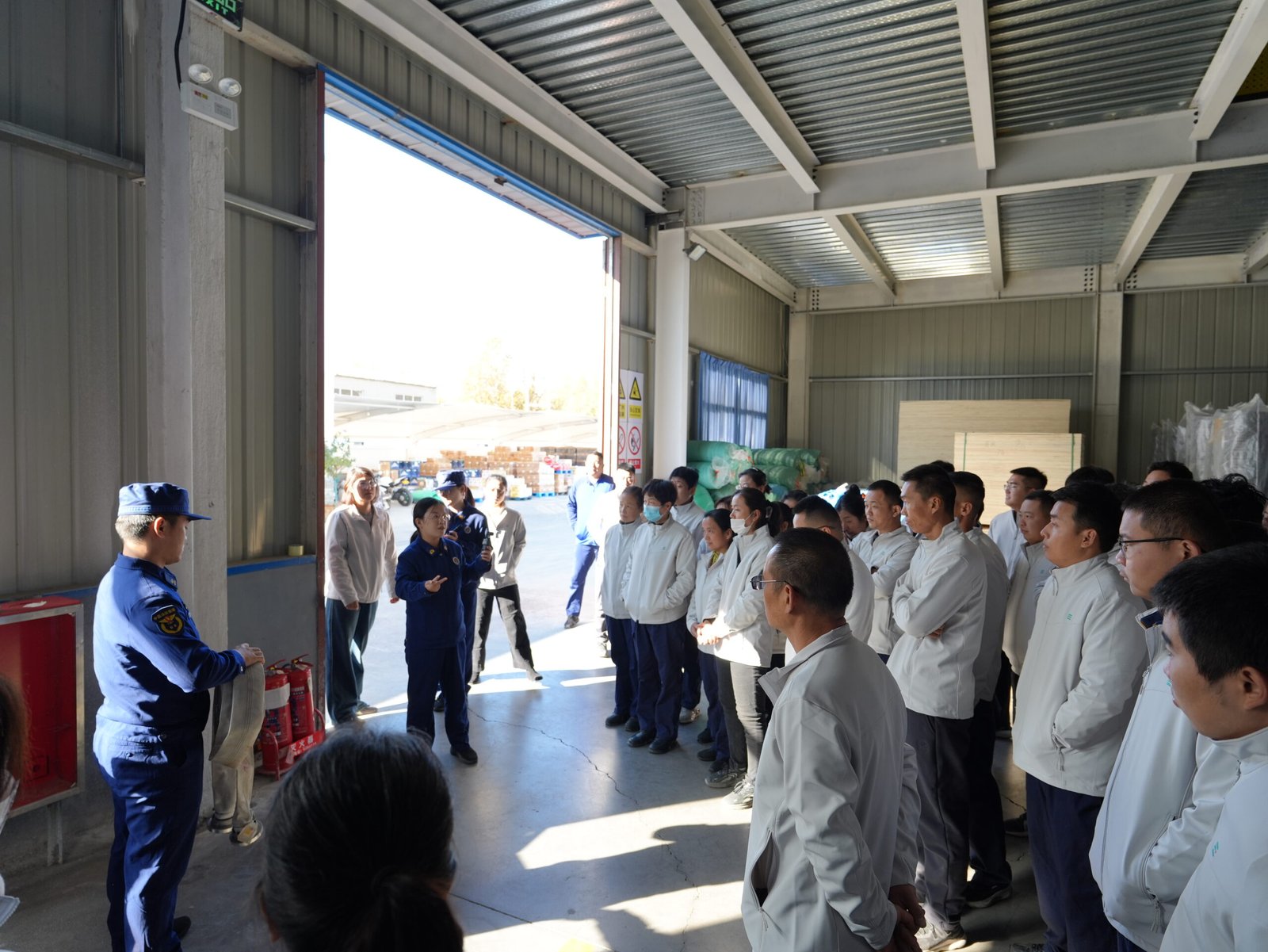
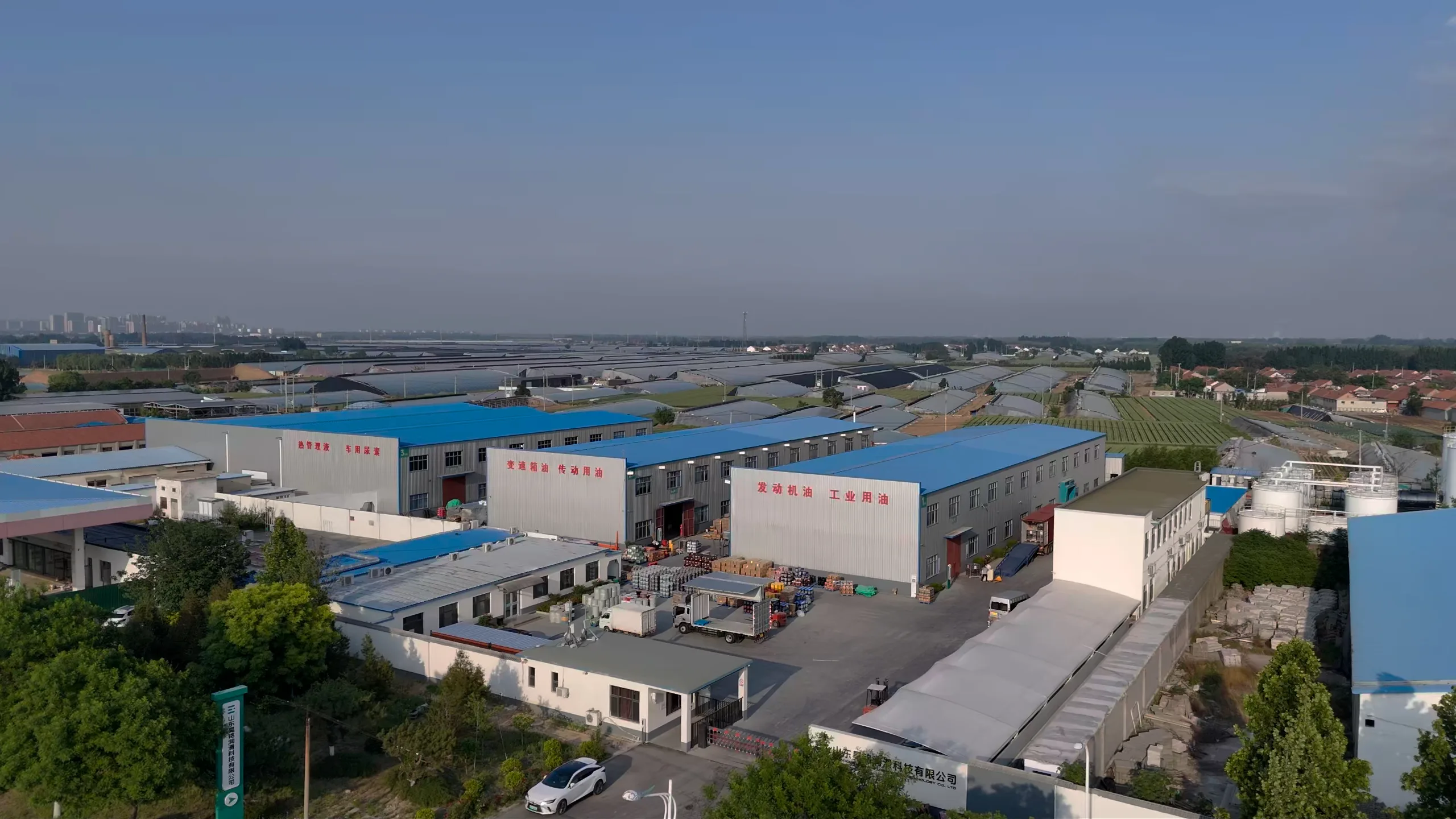
To effectively strengthen work safety safeguards, mitigate fire risks associated with lubricant production and storage, and further raise all employees’ fire‑safety awareness and self‑rescue emergency‑response capabilities, our company recently invited instructors from the Guangrao County Fire and Rescue Bureau to our factory site to deliver a special fire‑safety training session and organize a full‑staff emergency evacuation drill.
Adhering to the principle of theory‑first, practice‑oriented implementation, this activity was attended by all company employees.
During the theoretical training session, fire‑safety instructors drew on the fire‑prone characteristics of the lubricant industry. They covered key topics including identification of common fire hazards within the plant, fire‑alarm procedures, critical precautions for escaping fire scenes, and responses to incipient fires. By analyzing real‑world fire accident cases, the instructors vividly illustrated the severe consequences of fires. They also corrected unsafe work habits that are often overlooked in daily operations, helping every employee fully understand the significance of fire safety and internalize safety awareness.
Upon completion of the theoretical training, the fire emergency evacuation drill officially commenced. All employees returned to their workstations and carried out evacuation calmly and methodically in accordance with the emergency response plan. Keeping low postures and taking protective measures, staff quickly evacuated along pre‑determined escape routes to the designated outdoor safe assembly point. The whole process proceeded smoothly without crowding or panic. After evacuation, site supervisors conducted a headcount to ensure no one was left behind. The drill was successfully completed, verifying the feasibility of the company’s emergency plan as well as employees’ responsiveness during emergency evacuations.
Following the drill, hands‑on fire‑equipment training was carried out. Instructors demonstrated the proper donning procedure for smoke‑proof fire masks, explaining when to use them and relevant safety notes. They also demonstrated the four‑step operating procedure for dry‑powder fire extinguishers: lift, pull, aim, squeeze. Employees then took turns for hands‑on practice under on‑site guidance. Through attentive learning and practical experience, personnel mastered the operation of firefighting gear, enabling them to report fires, execute evacuations, and operate fire‑fighting equipment in real‑fire scenarios.
Safety is never trivial; preparedness prevents fire hazards. This combined fire‑safety training and drill integrated theoretical learning, on‑site evacuation, and hands‑on equipment operation, addressing gaps in employees’ emergency‑response skills. Going forward, our company will continue to organize regular safety education and emergency drills. We will rigorously implement the main‑body responsibility for work safety, conduct thorough inspections for potential safety risks, hold fast to the bottom line of safe production, and safeguard stable and orderly business operations.